Ingrown Toenails
Expert care for painful ingrown toenails at {brand.name}—relieving discomfort and preventing infection with personalized treatment.

Expert care for painful ingrown toenails at {brand.name}—relieving discomfort and preventing infection with personalized treatment.
Experiencing an ingrown toenail can be more than just uncomfortable—it can significantly impact your daily life. Commonly found in the big toe, this condition arises when a nail grows into the surrounding skin, causing pain and potential infection if left untreated. At {brand.name}, we understand the discomfort ingrown toenails can cause, which is why we offer expert care to address this issue promptly. Symptoms of ingrown toenails include pain along the side or sides of the affected nail, exacerbated by ill-fitting shoes and pressure. If left unchecked, ingrown toenails can lead to infections, marked by redness, swelling, and drainage. Don't let ingrown toenails disrupt your routine any longer. Schedule a consultation with one of our trusted dermatology providers to receive personalized treatment and find relief from the discomfort of ingrown toenails.
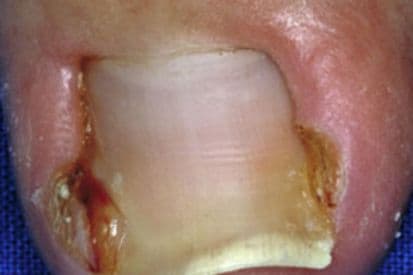
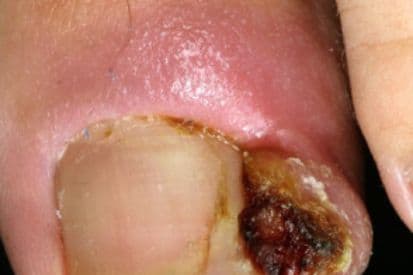
Examples of Ingrown Toenails

Symptoms of Ingrown Toenails?
Infection signs such as redness, swelling, and the discharge of pus.
Pain along the side or sides of the affected nail.
Causes of Ingrown Toenails
Improper footwear, specifically, cramped shoes with insufficient room in the toes for proper nail growth.
Poor nail cutting skills or trauma to the toe which injures the flesh and causes irregular nail growth.
How to Prevent Ingrown Toenails
Preventing ingrown toenails involves several key steps.
Proper Shoes: Wear well-fitting shoes with enough room for toes to prevent constriction.
Nail Maintenance: Trim toenails straight across and avoid rounding the edges to discourage ingrowth. Be cautious while cutting nails, avoiding overly short trimming.
Good Hygiene: Keep feet clean and dry, practicing good hygiene.
Fabric Choice: Choose breathable socks and shoes to promote a healthy foot environment.
Seek Professional Care: If an ingrown toenail is suspected, visit one of our providers promptly to prevent complications.
Regular foot inspections and mindful nail care go a long way in preventing ingrown toenails and ensuring comfort and overall foot health,
Ingrown Toenail FAQs
How to Treat Ingrown Toenails
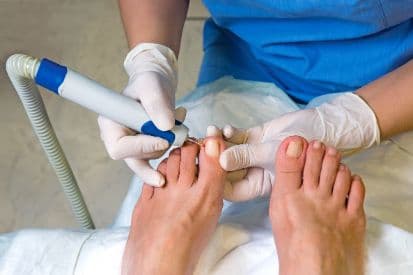
The first step to treating an ingrown nail is to soak it in warm water with salts and to avoid the shoes that caused the condition. In addition, antibacterial ointments may help reduce the risk of infection.It is always best to follow up with a visit to one of our trusted providers to assess the nail. If necessary, your dermatologist will perform a complete removal of the affected nail.